Join Our Waitlist


.svg)
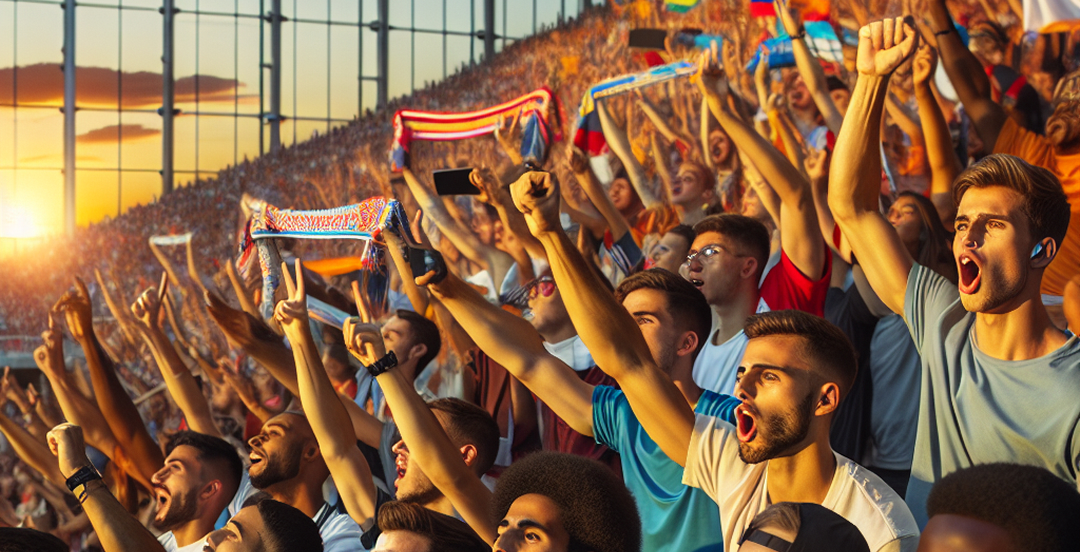
There has never been a better time to be a sports fan. But there has also never been a more frustrating time to find your people online.
The sports fan community online has exploded over the past decade. Millions of fans across the world from Toronto Maple Leafs diehards to Vancouver Whitecaps supporters are moving their conversations off the couch and onto their phones. The energy of match day no longer lives only in stadiums. It lives in group chats, live threads, and dedicated apps built for people who bleed their team's colours.
This guide covers everything you need to know about online sports fan communities in 2026. We'll explore how they evolved, what makes them thrive, and how platforms like Octagon are building the future of digital fandom one supporter at a time.
Whether you're a die-hard season ticket holder or a casual fan catching weekend games, there's a community out there for you. Let's find it.
Online sports fandom didn't start with Instagram stories or TikTok recaps. It started in the late 1990s with clunky message boards where fans typed out 500-word match reports in Times New Roman. Those early forums were chaotic, slow, and occasionally unhinged but they were also something special. They were the first proof that fans would seek each other out, no matter the medium.
Fast forward to the mid-2010s, and Twitter became the de facto home of live sports conversation. Reddit communities like r/soccer and r/nba grew into some of the most active online spaces on the internet. Facebook Groups gave local supporter clubs a digital meeting room.
But none of these platforms were built for sports fans. They were adapted by them. And that difference matters more than most people realize.
Psychologists have long understood that sports fandom satisfies a fundamental human need: belonging. Supporting a team isn't just about the game. It's about identity. It's about a shared language, shared history, and shared heartbreak.
This is what researchers call the "fan tribe" a group of individuals bound together not by geography or profession, but by passion. In Canada, where over 75% of the population identifies as sports fans (Leger, 2023), the desire to connect around sport is deeply embedded in the culture. Montrealers grieving a Canadiens playoff exit, Torontonians buzzing after a Raptors win these are tribal experiences.
Online communities let that tribe exist beyond the city, beyond the timezone, and beyond the final whistle.
Here's the uncomfortable truth: Facebook, Instagram, and X (formerly Twitter) were never designed for sports fans. They were designed for advertising revenue. Sports content gets buried under algorithm-driven feeds optimized for engagement bait, not genuine community.
The result? Real conversations get crowded out. Toxic trolling goes unchecked. Match day buzz disappears into a void of unrelated content within hours. Fans are left scrolling through noise, searching for signals.
A dedicated sports fan community online solves this problem at the structural level not by tweaking a feed, but by building an entirely different kind of space.

Not every online fan group is created equal. Some are ghost towns. Some are hostile. Some are genuinely exceptional. What separates the great ones from the rest comes down to three core qualities.
A sports community lives and dies by its real-time energy. When a last-minute goal goes in, fans don't want to post a reaction 20 minutes later; they want to scream into a group chat the second it happens.
The best platforms are built for low-latency, high-energy conversation. That means push notifications, live chat rooms, instant polls, and in-the-moment reactions. It means the platform doesn't slow down when 10,000 fans are posting simultaneously at halftime.
Real-time capability isn't a feature. It's a requirement.
The strongest online fan communities have a clear sense of identity. Members know the culture, the references, the unspoken rules. There's a difference between someone who follows a team and someone who supports a team and great communities reflect that nuance.
Authenticity comes from design choices: team badges, supporter group affiliations, flair systems, and profile customization that lets fans signal who they are before they've typed a single word. When identity is embedded in the platform itself, conversations start from a place of common ground.
Good-natured banter is the lifeblood of sports fandom. But there's a clear line between banter and toxicity and many platforms fail to hold it.
Effective moderation isn't about sanitizing conversation. It's about creating clear community standards, enforcing them consistently, and giving community leaders the tools to manage their own spaces. Fans should be able to debate aggressively without feeling unsafe or unwelcome.
The best communities invest in moderation infrastructure as seriously as they invest in any other feature.
Broadcast networks give you the official match. A dedicated sports fan community gives you everything else. Fan-generated highlights, tactical breakdowns from amateur analysts, pre-match rituals from supporter groups, post-match voice chats dissecting every decision this is content you can't get anywhere else.
According to a 2024 Nielsen Sports report, fan-generated content drives 3x higher engagement than brand-produced content among sports audiences under 35. The crowd has become the media. The best communities are built to amplify that.
Canadian sports fans don't just follow Canadian teams. A Vancouver-based fan might passionately support Liverpool FC, the Montreal Canadiens, and the Toronto Blue Jays simultaneously. Online communities let that fan connect with supporters in Manchester, Montreal, and everywhere in between.
This geographic fluidity is one of the most powerful things about digital fandom. A well-designed sports fan community online tears down borders without losing the sense of local belonging.
The pandemic accelerated one major shift in sports fandom: virtual watch parties became mainstream. What started as a workaround became a genuine enhancement to the match day experience for millions of fans.
Virtual watch parties let scattered supporter groups come together in real time reacting, debating, celebrating, and commiserating as if they were in the same room. Combined with live chats, polls, and instant stats, the result is a match day experience that rivals (and sometimes exceeds) watching with friends in person.
Before you go looking for a community, get clear on what kind of fan you are. Ask yourself:
Your answers will shape which platform and which group is right for you. A hardcore football supporter in Toronto has different needs than a casual NBA fan in Calgary. Both are valid. Both deserve a community that fits.
When assessing any sports community app, look for the following:
[See all of Octagon's fan tools → Features Page] for a detailed breakdown of what a purpose-built platform looks like in practice.
Joining a new online community can feel intimidating. Here's the simplest advice: start by listening.
Spend a few days reading existing threads, learning the community's tone, and identifying the conversations you most want to join. Then introduce yourself. Most fan communities are welcoming to genuine newcomers who show up with respect and enthusiasm.
Don't try to be the loudest voice in the room on day one. Build credibility organically. The best online fan friendships develop over weeks and months of consistent, genuine interaction.
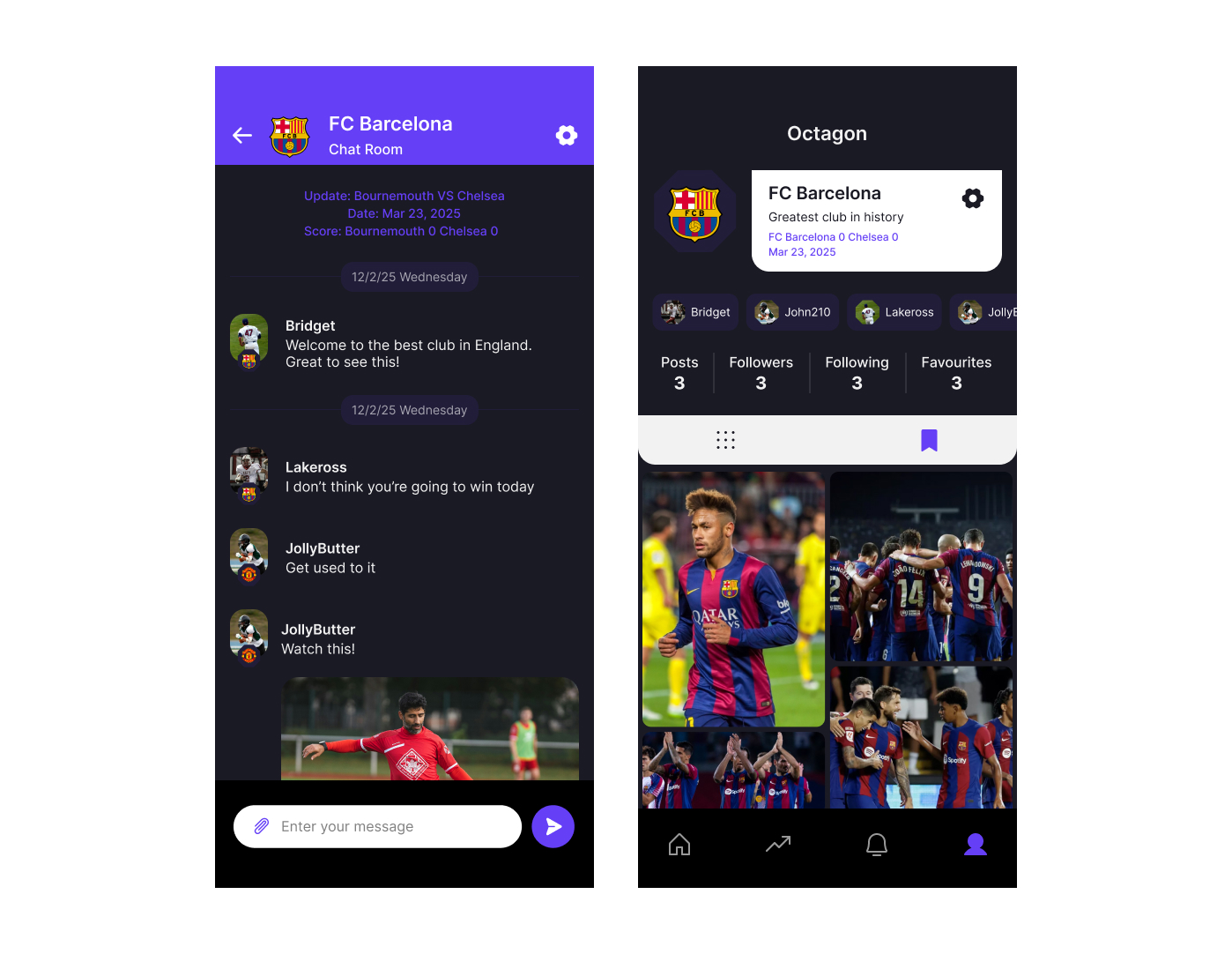
Octagon was built from the ground up for one purpose: to give sports fans a home that general social media was never willing to build for them. It combines real-time match day chat, team-specific community rooms, fan profile customization, and supporter group tools into a single mobile-first platform.
Unlike adapted general platforms, Octagon's entire architecture is designed around the rhythms of sports fandom: the pre-match buildup, the live action, the post-match analysis, and the slow-burn transfer window debates in between.
The comparison isn't close. Purpose-built wins in almost every category that matters to dedicated fans.
A 2025 study by Sprout Social found that niche online communities generate 68% higher engagement rates than equivalent content posted on general social media platforms. The reason is simple: relevance. When every person in a room shares the same core interest, every conversation has immediate value to everyone in it.
Big platforms optimize for scale. Niche communities optimize for depth. For sports fans who want real conversation rather than viral content, depth wins every time.
Step 1: Download the Octagon app from the App Store or Google Play (or join the waitlist at octagonapp.com for early access).
Step 2: Create your account using your email or social login. Choose a username that represents you as a fan; this is your identity in the community.
Step 3: Complete your fan profile. Add your location (city, province), your sporting background, and a short bio. Let people know who you are before the match chat begins.
Step 4: Select your team badges. Octagon allows you to display support for multiple teams across multiple sports because real fans rarely follow just one.
Step 5: Set your primary team. This will determine your default community feed and which match day chat rooms appear prominently for you.
Step 6: Customize your supporter profile with any additional affiliations local supporter clubs, fantasy leagues, or supporter groups you're part of in Canadian cities or abroad.
Step 7: Browse the community directory and find your team's chat room. For Canadian fans, you'll find active communities for all major Canadian clubs as well as the most popular international leagues.
Step 8: Introduce yourself in the welcome thread. A simple "new here, been supporting [team] since [year]" is all you need.
Step 9: Turn on match day notifications so you never miss the real-time chat during live games. This is where the magic happens.
The 2026 FIFA World Cup co-hosted by Canada, the United States, and Mexico is set to be the largest sporting event in history. With Canada hosting matches in Toronto and Vancouver, the tournament will generate unprecedented levels of digital fan engagement across North America.
Expect a surge in sports fan community online activity throughout the summer of 2026. New fans will enter the space. Casual followers will become passionate supporters. The demand for dedicated, high-quality fan community platforms will be higher than it has ever been.
Artificial intelligence is beginning to reshape the fan experience in meaningful ways. Personalized content feeds that learn your preferences, AI-assisted match summaries, smart notification systems that know when to alert you and when to stay quiet these features are moving from experimental to standard rapidly.
The most forward-thinking platforms are already integrating AI not to replace the human element of community, but to amplify it. Surface the conversations most relevant to you. Highlight the fan content you'll care about. Reduce the noise without reducing the passion.
The era of purely top-down sports media is ending. Fans are producing podcasts, highlight reels, tactical analysis threads, and matchday vlogs that rival professional media in quality and often exceed it in authenticity.
Online communities are the distribution layer for this fan-led media revolution. Platforms that empower fans to create, share, and build audiences within the community will define the next decade of digital fandom. The fans who start building now will be the voices that matter most in 2030.
Sports fandom has always been about connection. The stadium. The pub. The living room with friends crammed on the couch. Online communities don't replace those experiences, they extend them, deepen them, and make them available 24 hours a day, 365 days a year.
The sports fan community online is not the future. It's the present. And the fans who find their tribe now who build their digital home before the biggest tournaments and seasons arrive will experience sport at a level that passive followers simply never will.
Octagon is that home. Purpose-built for fans who are serious about their sport, their team, and their community. No algorithm noise. No competing priorities. Just fans, their teams, and the conversations that matter.
The 2026 World Cup is coming to Canadian soil. A new season is always around the corner. Your fan tribe is already out there waiting.
Ready to find them? Join the Octagon waitlist today and be among the first fans through the door.


.webp)







.webp)